
5 Decisions That Make Your First Business Automation Easier To Run
3 min read
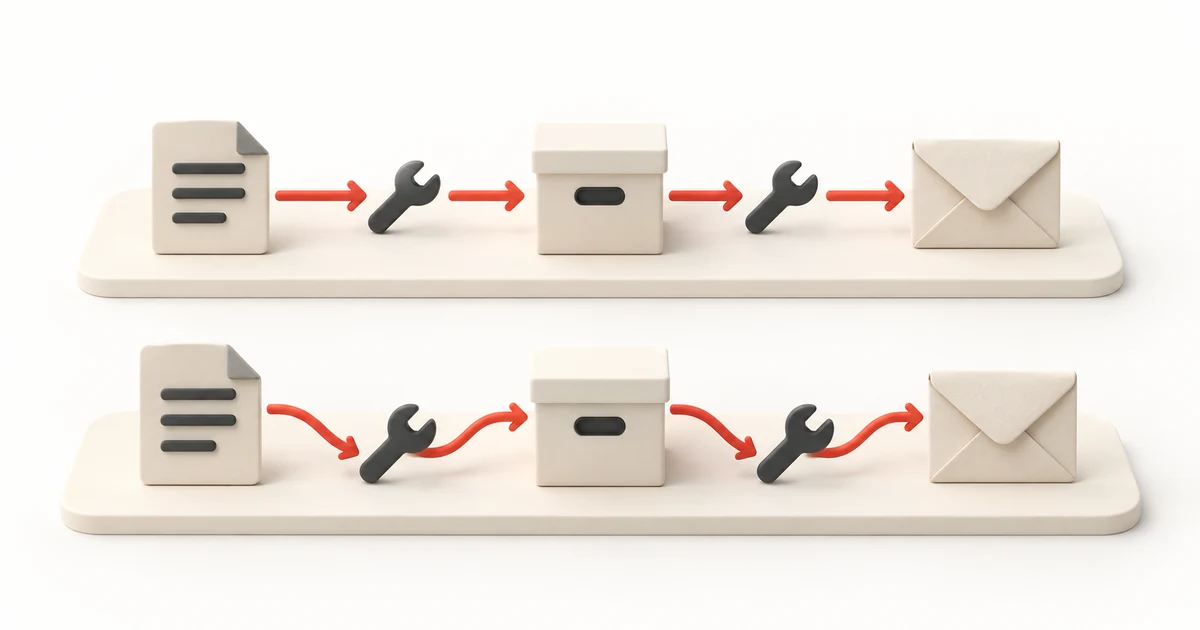
Before choosing software, write down how one task should start, what a correct result looks like and who handles the cases it can't finish. Those decisions give you a way to compare tools without building a complicated workflow first.
Consider one example: a new enquiry arrives, its details are checked, and a person gets a draft follow-up. The same planning method works for other repeated tasks.
1. Choose One Trigger And One Finish Line
"Help with sales" leaves too much open. "When an enquiry form is submitted, prepare a follow-up draft attached to the correct contact record" gives you something to test.
Decide what happens if the same form arrives twice. Also define when the task is finished: a draft existing somewhere isn't enough if the salesperson can't find it.
2. Decide Which Inputs Are Required
List the fields the task genuinely needs. For the enquiry example, that might be a contact address, the request and the product involved. Don't collect extra personal information because a connector makes it available.
Set a rule for missing or contradictory inputs. The workflow could send the item to a review queue rather than guessing the product or inventing a contact match. Keep the original source easy for the reviewer to open.
3. Put Review Before Consequential Actions
Preparing a draft and sending it create different risks. A useful first version can stop at a reviewable draft while a person keeps responsibility for the recipient and words.
Name the reviewer and where the item appears. Decide what happens if nobody reviews it. An unattended approval queue can leave customers waiting even when every technical step succeeds.
4. Assign The Operating Responsibilities
Who can change the workflow? Who pays for its accounts? Who notices a failed connection? Who can take over when its builder is away?
These questions matter whether you use a hosted tool or manage more of the setup yourself. Compare tools against the responsibilities your team can actually carry. Check current vendor terms and usage limits before committing; don't choose from an old pricing screenshot.
5. Make Recovery Part Of The First Version
Try an incomplete form, a duplicate, a disconnected destination and an output that needs correction. Record what happened and how the operator knows what to do next.
A recovery note can be short: where the item stopped, how to check whether it already created a record, and who can safely retry it. Avoid a retry that sends the same message twice.
For an outbound workflow, keep these rules with the contact records and follow-up drafts so the next operator can see what should happen.
Use these five decisions as your brief. Ask each candidate tool or builder to show how the smallest version would handle them. You'll get a more useful answer than a feature comparison detached from your task.
To learn how to turn that brief into a workflow, the AI Workflows, Agents & Automation course covers design, evaluation, human review, costs and fallbacks. It is a learning route, not a done-for-you build.