
Design An AI Workflow With Review Checks
3 min read
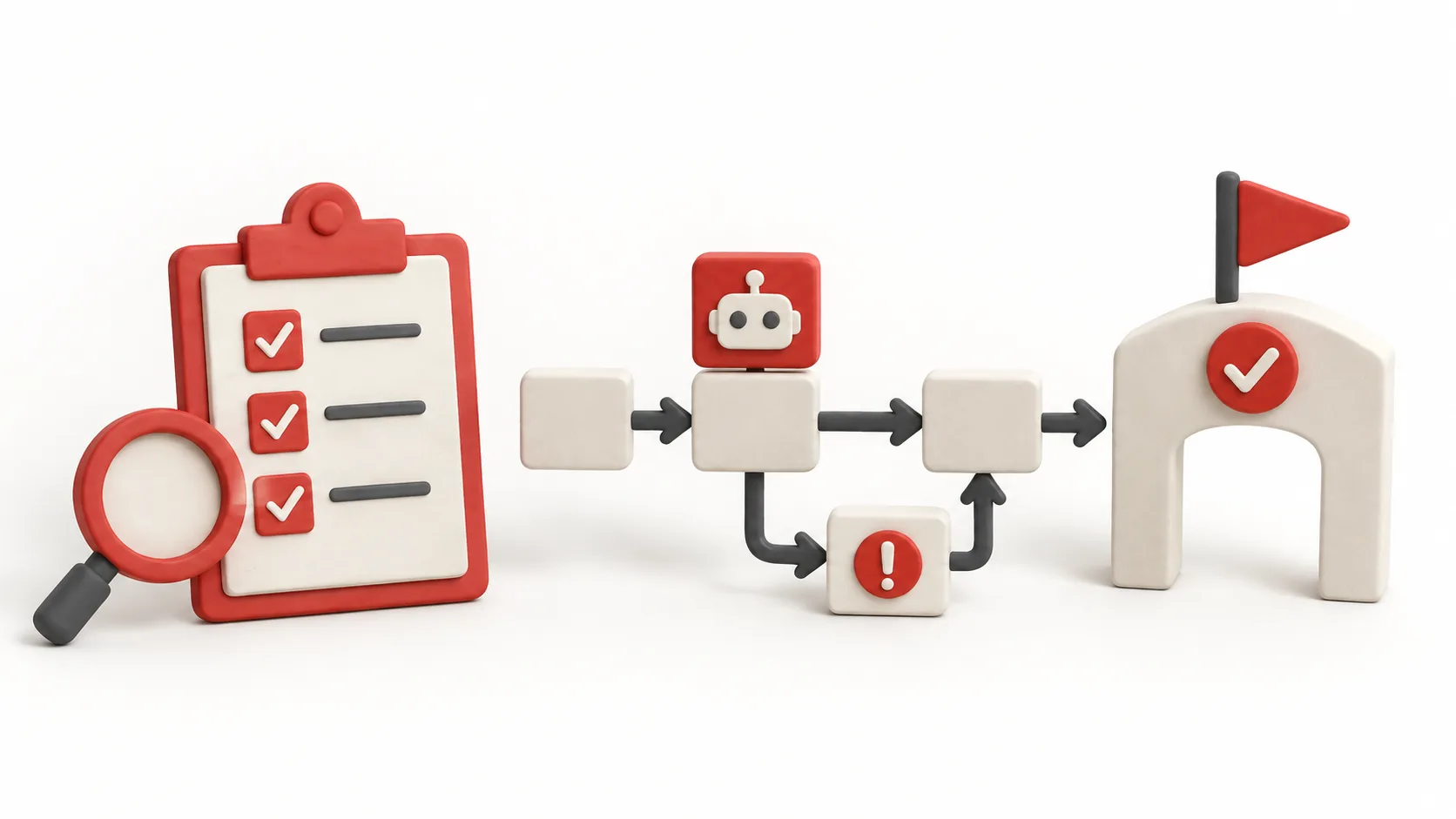
A useful AI workflow starts with a business task and a checkable result. A convincing demonstration is not enough when the output will become a document, a customer message or a decision someone relies on. The workflow needs a way to handle incomplete inputs and uncertain results without disguising them as finished work.
Choose one bounded task first. Make its inputs, output and review path clear before adding more steps or connecting it to live actions.
Define The Input And Output
Write down what information the task receives and what the finished result must contain. For a fictional invoice-reminder workflow, inputs might include the invoice record, current payment status and the business's approved reminder policy. The output could be a draft reminder for a person to review.
Those details matter because the same invoice number can appear in a stale spreadsheet and a current payment system. Decide which source controls the answer and what to do when the records disagree. Do not let a well-written draft hide an unresolved factual gap.
Keep Drafting Separate From Action
Generating a proposed message and sending it are different steps. A prototype can stop at the draft while you learn whether the content is accurate and useful. Before any live action, define the approval requirement, recipient selection and limits that apply to the task.
Use synthetic records while developing the workflow. If you later test on business data, use only sources and systems approved for that purpose. Do not put credentials or unrelated private records into a prompt simply because they are available.
Test More Than The Happy Path
Create a small set of cases with known expected outcomes. Include missing fields, contradictory records, unusual wording and an input that should cause the workflow to stop. Compare the output against the source record, not only against whether the prose sounds polished.
Keep the test cases available when changing a prompt or step. A change that improves one case can weaken another. Testing does not prove every future result will be correct, but it gives the team an actual basis for deciding what needs review.
Give Exceptions A Destination
An exception needs a next step. Name the person or queue that receives it and show which facts remain unresolved. Avoid making the reviewer reconstruct the problem from a confident-looking output and a vague warning.
Track time, costs and corrections during a limited trial. If the review work outweighs the useful output, simplify the task or choose a different one. The aim is a workable process, not automation for its own sake.
Choose A Learning Path That Matches The Task
If you want a course for this, match the level to the task. Build Your First AI Workflow is free and beginner-level: it takes one task through mapping, instructions, wiring and testing on real cases. AI Workflows, Agents & Automation is DigitalDecided's advanced paid course, for when a prototype has to become a reviewed business process, with evaluation, approval gates, exception queues and production monitoring among its topics. Either way, your own tested process and source checks decide whether the workflow is ready to use.
Related
More on AI: the AI topic page collects the posts, the tools, and the offers in one place.