
How To Plan A Product Launch, Pricing And Customer Acquisition
3 min read
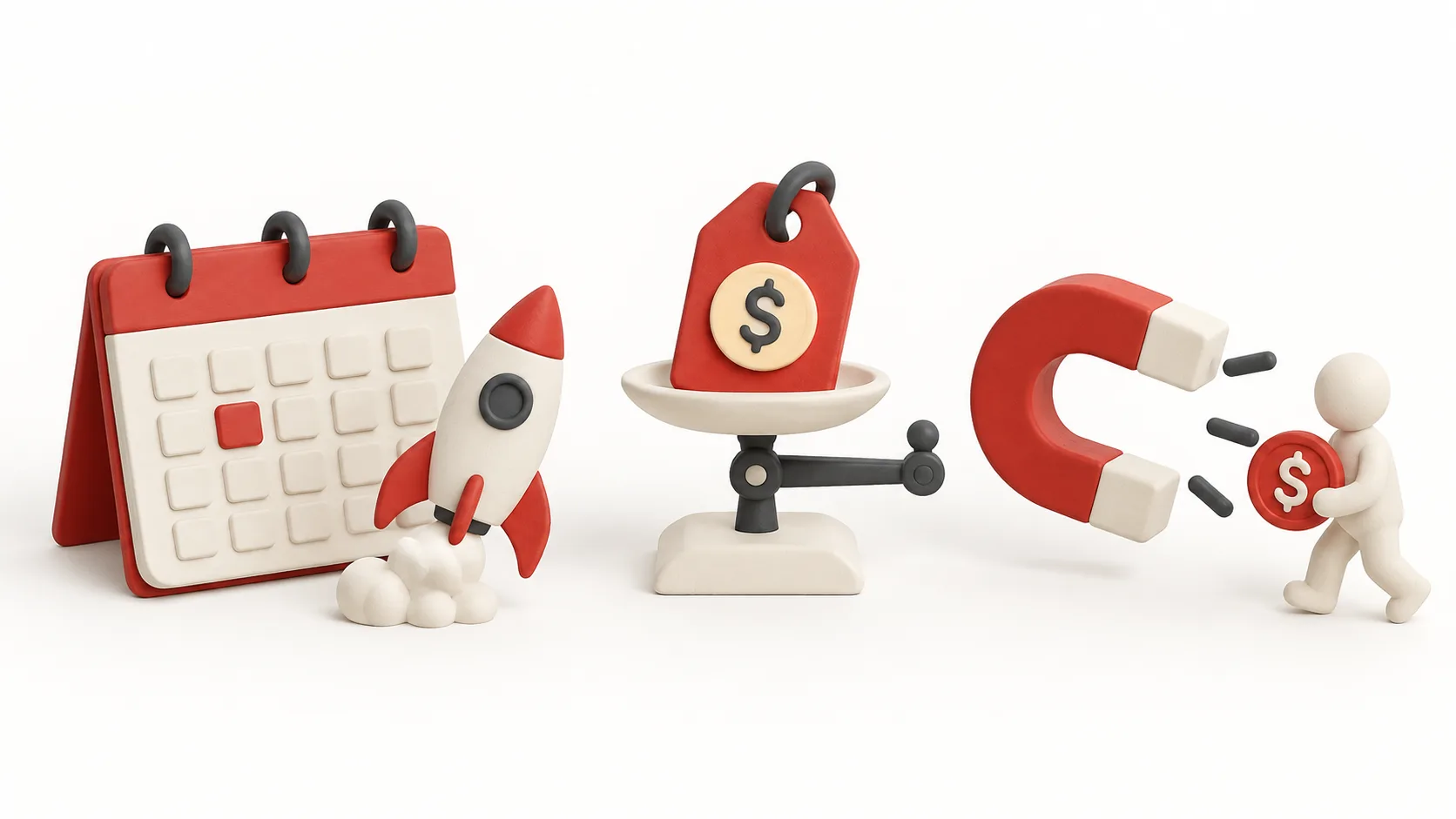
Before launching, plan the sequence, price and acquisition budget together. Write down the assumptions behind each so you can compare them with the results.
Sequence The Launch
Plan what happens before, during and after launch day. Before: tell a small audience, collect interest and test your message. During: make one clear offer and a place to act. After: follow up with people who showed interest and collect feedback. A hypothetical example is a waitlist that opens to early users first, then everyone.
Set A Price You Can Defend
Write down why the price is what it is: what the customer saves or gains, your delivery costs and the value of the work to the customer. Record those assumptions before testing the price with potential customers. Test it with a few real conversations before publishing.
Check That Acquisition Pays Back
Work out what it costs to win one customer: spend, time and tools. Compare it with the contribution after delivery costs, fees and refunds, not just revenue. Estimate when acquisition costs are recovered, and keep uncertain retention assumptions visible. If the cost is higher than the return, change the channel, the offer or the price before spending more.
Review After Launch
Record what worked and what did not. Note where people dropped off, which messages got replies and which channel produced customers. Use that for the next push.
If You Want Skill Files
The Launch and Revenue Pack covers the same three decisions: skill files for launch sequencing, pricing and paid acquisition, plus a competitive-landscape file, with setup instructions for Claude, ChatGPT, Cursor, Codex CLI and Gemini CLI. Bring your launch sequence, cost assumptions and pricing questions. Yours forever, updates included.