
How To Write Campaign Copy That Works Across Ad, Page And Email
3 min read
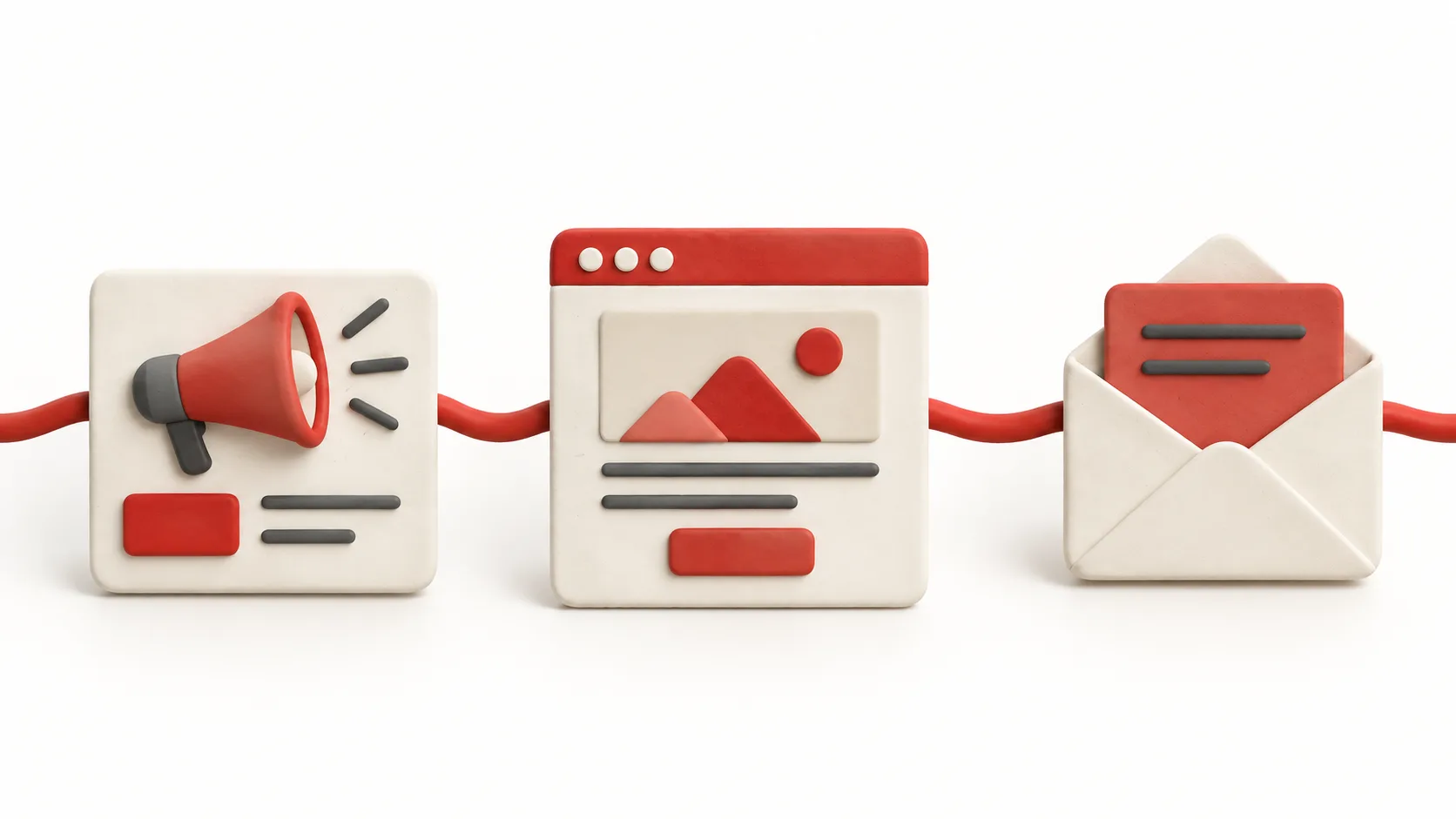
Check the ad, landing page and follow-up email against the same promise. If an ad names one offer and the page describes another, the reader has to work out what changed.
Decide The One Message
Before writing anything, write one sentence: who it is for, what problem it solves and what you want them to do. Every piece of copy should serve that sentence.
Match The Ad To The Page
Use the same words in the ad and the landing page headline, so a click feels like a continuation. A hypothetical example: if an ad offers "a free scheduling checklist for clinics", the page should lead with that checklist, not a general company intro.
Make The Page Do One Thing
Explain what the reader gets, who it is for and what to do next. Remove unrelated distractions while keeping required terms, privacy information and useful navigation. Answer the doubts a reader is likely to have.
Follow Up In The Same Voice
The email after sign-up should deliver what was offered and explain the next step. Match later marketing messages to what the person agreed to receive and honor opt-outs. Keep the tone and terms the same as the ad and page.
Add An Offer Page When Ready
When someone is ready to buy, the offer page should state what is included, who it is for and how to proceed. Keep it consistent with the earlier steps.
Review As One Campaign
Put the ad, page and email side by side. Check that the promise, terms, voice and action line up. Fix any place where a reader would feel a jump.
If You Want A Playbook
The Demand Generation Copy Playbook is built around this same one-campaign check: copy for each stage - ad, landing page, follow-up email and offer page - plus a planning sheet and a review list. Bring your offer facts and your existing copy, and compare.
Related
More on Branding: the Branding topic page collects the posts, the tools, and the offers in one place.